The league’s first draft is already taking shape as eight separate exercises in roster construction. From No. 10 through No. 32, each club is describing a different way to build a first CGL roster: some want sturdiness, some want passing value, some want pressure on opposing offenses, and all of them are trying to turn draft position into something more than a lottery result. The public stories do not give away picks, but they do show how the teams are thinking about value, roles and risk before the board opens.
Omaha Starts With Stability, Not Noise
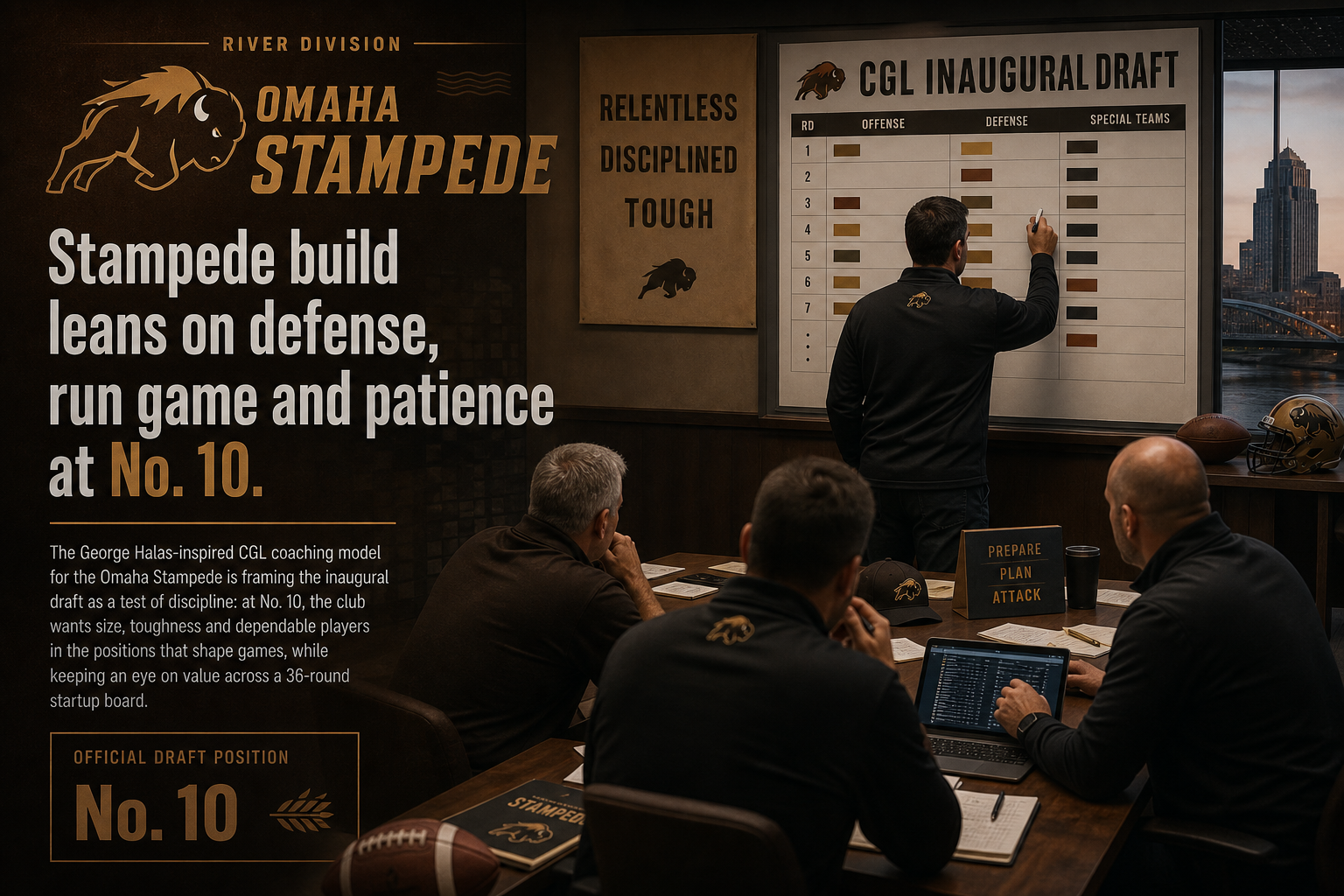
At No. 10, the Omaha Stampede public model is built around defense, run-game control and dependable roles. The George Halas-inspired coaching model emphasized defensive line, linebacker, running back and safety first, with quarterback only if the value justifies it. The key trait is discipline: Omaha wants players who reduce weekly variance and help the roster stay sound over a long startup draft.
Grand Rapids Wants Passing Value With Guardrails
The Grand Rapids Lumberjacks are using No. 20 to target passing offense without losing roster balance. The Curly Lambeau-inspired model emphasized quarterback, wide receiver and running back, while also valuing safety and tight end if they add real weekly utility. The public philosophy centers on separation, dependable touches and clean decision-making, not just splash plays.
St. Louis Is Building Around Balance and Role Clarity
At No. 22, the St. Louis Stallions are framing the draft as a discipline test, not a reach test. The Dick Vermeil-inspired model highlighted quarterback play, skill talent, linebackers and tight ends with receiving value, while stressing a connected core and clear jobs. The distinctive thread is balance: immediate help matters, but not at the expense of long-term roster shape.
Memphis Wants Offensive Stress, Not Safe Choices
The Memphis Blues are treating No. 23 as an opportunity to force problems on defenses. The Sean Payton-inspired model emphasized quarterback, receiver, tight end and backs who stay on the field, with a strong preference for players who create mismatches and coverage stress. This is the most overtly leverage-driven offensive philosophy in the group.
Milwaukee Is Chasing Dependable Production at No. 28
The Milwaukee Brawlers public plan puts reliability ahead of flash. The Vince Lombardi-inspired model named quarterback, running back, linebacker, safety and tight end as priority areas, with a premium on clear roles and weekly production. The point is not conservative football; it is football that can be counted on when the game gets harder.
Columbus Treats the Board Like a Discipline Test
At No. 29, the Columbus Generals are leaning into structure and patience. The Paul Brown-inspired model emphasized quarterback, receiver, linebacker and corner, with tight end only if the receiving value is real. The defining trait is teachability: Columbus wants players with stable roles, repeatable habits and enough quality to justify waiting for the right fit.
Rochester Wants Trust Before Upside
The Rochester Norsemen are using No. 31 to build around dependable core players. The Tom Coughlin-inspired model centered quarterback, running back and receiver, with linebacker and safety next, and treated tight end as valuable only when the weekly role is clear. The public emphasis is on discipline, consistency and roster structure before upside.
Louisville Starts at the Turn With Defense First
At No. 32, the Louisville Sentinels are trying to turn patience into leverage. The Tony Dungy-inspired model put linebackers, safeties, corners and edge rushers first, with quarterback and tight end considered only if the role and value fit cleanly. Louisville’s public identity is built on defense, role security and a roster that should not need constant repair.
The common thread is not sameness; it is discipline. Each club is approaching the inaugural draft through a different lens, but all eight are trying to balance position, role and value without forcing the board. That is the real pre-draft story now: not who they are promised to take, but how they intend to think when the first picks start coming off the board.