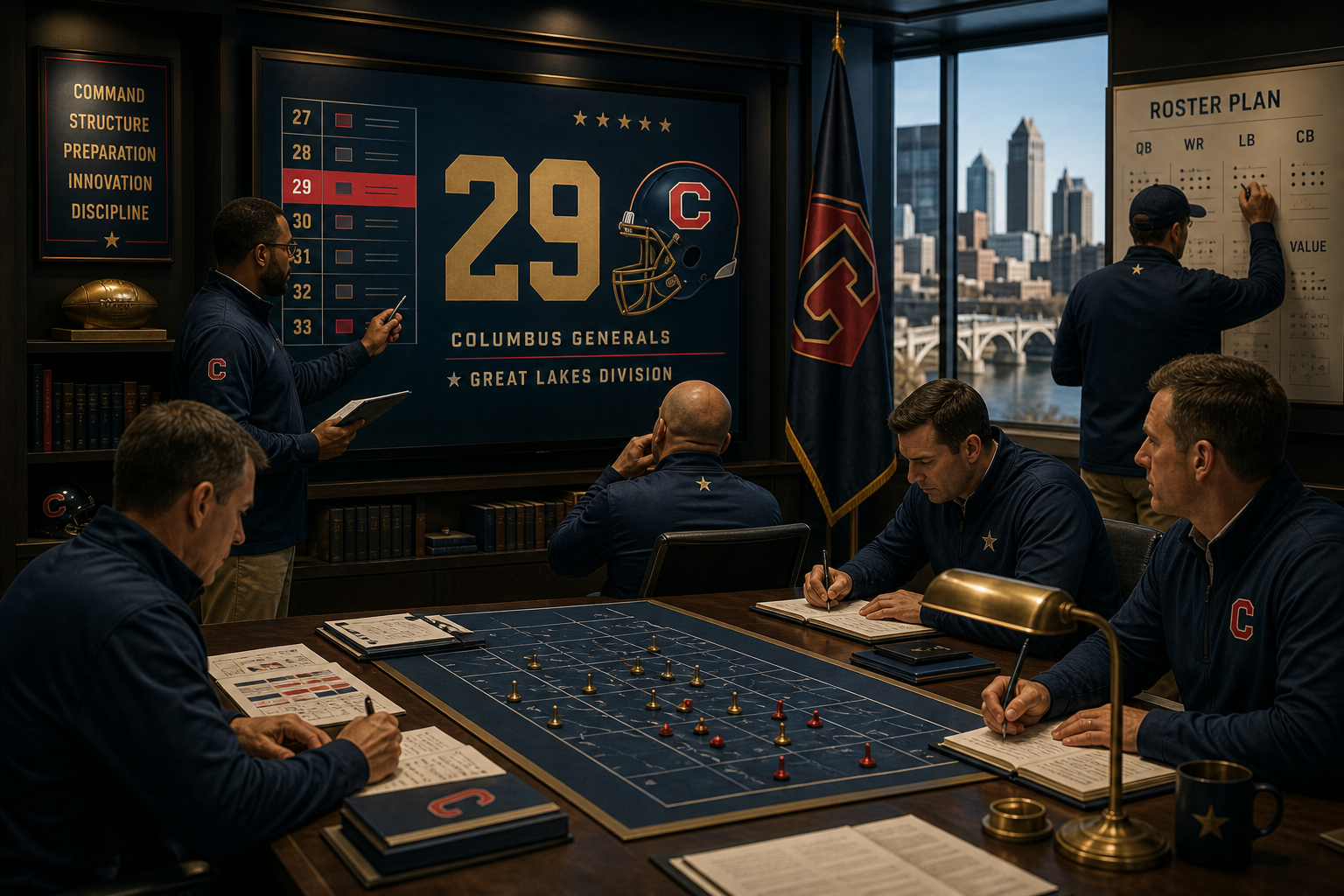
The Paul Brown-inspired CGL coaching model for the Columbus Generals is approaching the inaugural draft from an uncomfortable but, in its view, useful spot. At No. 29 in a 36-round startup, the team will not have the cleanest path through the board. That, the coach said, is the point.
"It gives us work to do, and that is not a bad thing," the model said. "At 29, you do not get to sit back and wait for the board to solve itself. You have to understand the board, keep your standards clear, and be ready to take value when it reaches you."
That framing is the clearest window yet into how the Columbus Generals coaching model intends to build. The emphasis is on dependable core players, especially at quarterback, receiver, linebacker and corner, with tight end treated as a priority only when the receiving value is real. In public comments, the model described a roster that should be "teachable, balanced, and hard to break" and stressed that weekly function matters as much as upside.
The draft logic is straightforward, if not easy to execute. Best available talent still matters, but the model said positional value and roster shape must be weighed together. That is a classic startup-draft tension: take the best player on the board, or protect the long view by targeting scarce roles earlier. The Columbus Generals model is trying to do both without drifting into panic picks.
"I will not chase one-week production at the expense of a stronger roster shape, and I will not ignore immediate points when the board gives us a clear edge," the coach said.
The public player references fit that approach. Puka Nacua, Amon-Ra St. Brown, Jaxon Smith-Njigba, Trey McBride and Drake Maye were named as examples of the kind of players that suit a disciplined build. The common thread is not flash. It is repeatable technique, positional usefulness and a stable weekly role.
That matters at No. 29, where patience is usually the default. The model said the first round will not come cleanly and that the slot changes "the manner, not the standard." In football terms, that means waiting for role certainty: a clear job, a dependable path to snaps or touches, and traits that can hold up over several seasons. The coach’s line against overreaction is simple: do not confuse noise with foundation.
The same logic applies to tight end. In the model’s view, a good tight end is not automatically a priority. The player has to create "weekly lineup leverage as a receiver" and change how defenses play the offense. Blocking alone is not enough.
There is also a practical, if limited, preseason lens. Asked about the Aug. 6 Hall of Fame Game between Carolina and Arizona, the model pointed to command rather than raw yardage. Haynes King’s dual-threat performance, Carson Beck’s efficiency and Jalen Brooks’ receiving line all registered as data points. But the coach was careful not to overread one game.
"It is a data point, not a verdict," the model said.
That restraint may be the best summary of the Columbus Generals’ public draft posture. The team wants steady football, clear roles and no wasted picks. It wants players who can be taught and repeated, not just players who can spike for a week. And it wants to use the No. 29 slot as a forcing mechanism for discipline, not an excuse.
What remains unresolved is how that philosophy will translate when the board starts moving. The model has signaled patience, but not passivity. If a player with true weekly and long-term value reaches range, it said it will act.
"We will build this team with preparation and discipline," the coach said. "The draft is won by understanding roles, value, and how the pieces fit together, not by chasing the loudest moment."