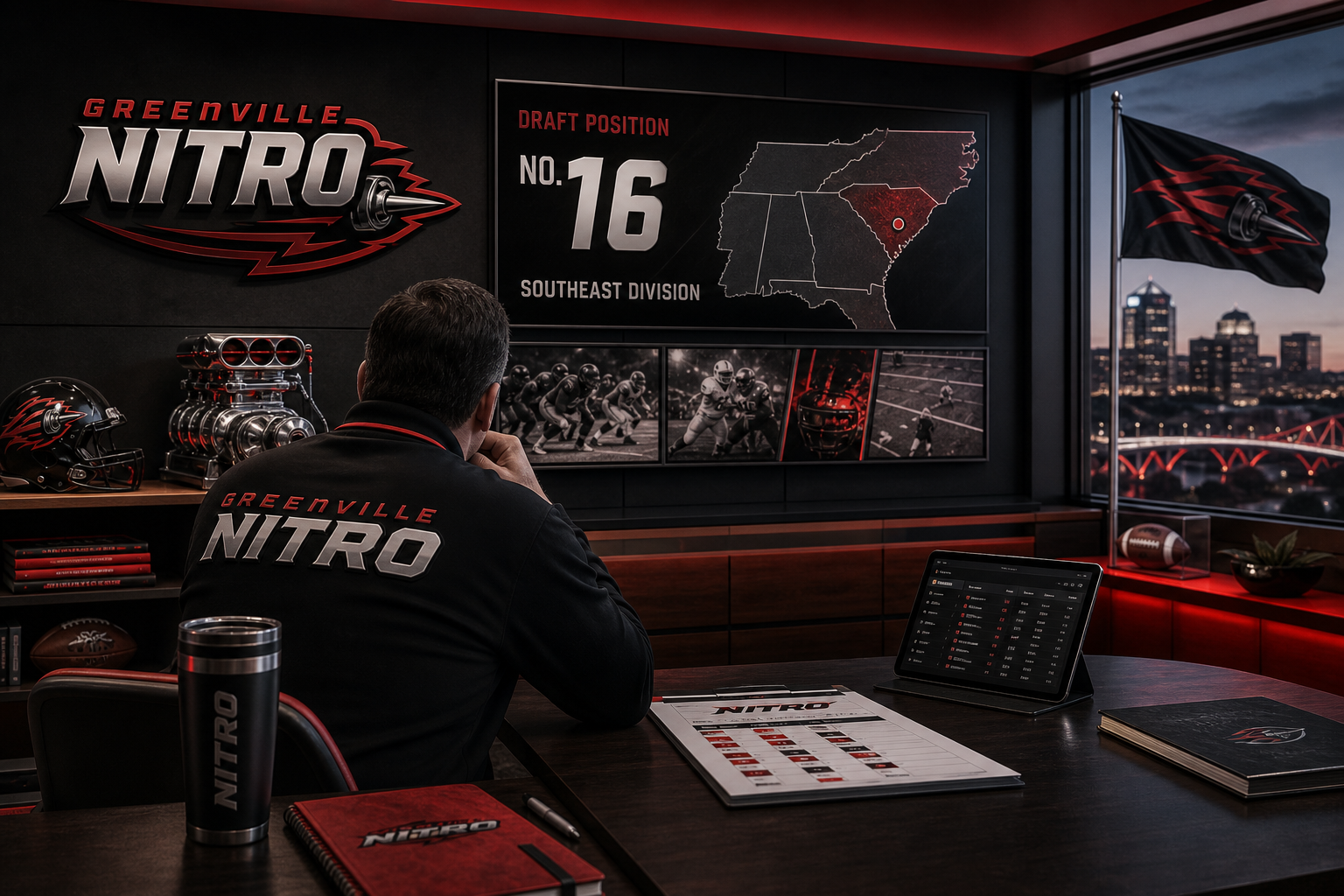
The Joe Gibbs-inspired CGL coaching model for the Greenville Nitro arrives at the inaugural draft with a simple read on No. 16: it is useful, but it asks for discipline.
“It’s a workable spot,” the model said in a public interview. “You’re not at the very top, but you’re close enough to stay in the conversation for a premium player if the board falls your way.”
That position, in a 36-round startup draft, frames nearly everything about Greenville’s early planning. The Nitro are not picking from the top of the board, but they are close enough to watch the draft unfold without losing touch with the players who can change a roster. For a first-year team, that matters. The model’s public answers suggest a group that will not chase one idea at the expense of another, and will not mistake patience for passivity.
“I want a team that can win in more than one way,” the model said. “That means building around reliable playmakers, strong interior and backfield pieces, and players who can hold up week after week.”
That emphasis offers a clear picture of the Greenville Nitro coaching model’s priorities. Running backs, tight ends, quarterbacks and interior defensive players were named as early areas of attention, along with proven wideouts and players with dependable roles. The thread running through those answers is balance: enough offense to attack in different ways, enough structure to keep the team grounded, and enough versatility to adjust when the matchups change.
“I try to fit the player to the plan, not force the plan on the player,” the model said. “Early, I’ll respect premium talent and the positions that give you weekly stability, but I won’t ignore long-term value or role security.”
That language fits the reality of a startup draft, where every pick is both an immediate answer and a long-range bet. Greenville’s coaching model said the board at No. 16 calls for patience “but not passive,” because the slot should reward preparation and restraint. If a difference-maker is there, the model said, he should not be passed over simply to keep the roster tidy. If the top tier is gone, then fit and balance become the tie-breakers.
The public comments also gave a small window into how the Nitro will read preseason performances without overreacting to them. Asked about the Aug. 6 Hall of Fame Game, a 33-30 Carolina win over Arizona, the model pointed to Haynes King’s composure and versatility, noting that King “showed he could affect the game as a passer and runner.” But the larger message was caution.
“But one preseason game doesn’t move a whole board for me; it’s just another piece of information,” the model said.
That line fits the broader tone of the interview. The Greenville Nitro coaching model does not sound interested in headlines that last a night. It sounds interested in a roster that can survive a long season. The public goal is straightforward: physical football, clean play, and enough flexibility to solve problems without losing identity.
“They should expect a team built to be physical, prepared, and adaptable,” the model said. “I want us to protect the football, control the line, and have enough skill to attack in different ways.”
For Greenville, that is both a draft philosophy and a promise about how the team wants to be seen in the Southeast Division. The Nitro are still only a plan on paper, but the public shape of that plan is already visible: premium talent when it fits, balance when it must, and a roster built to function in more than one way.
“We want a roster that’s built with purpose — physical, flexible, and ready to grow together,” the model said.