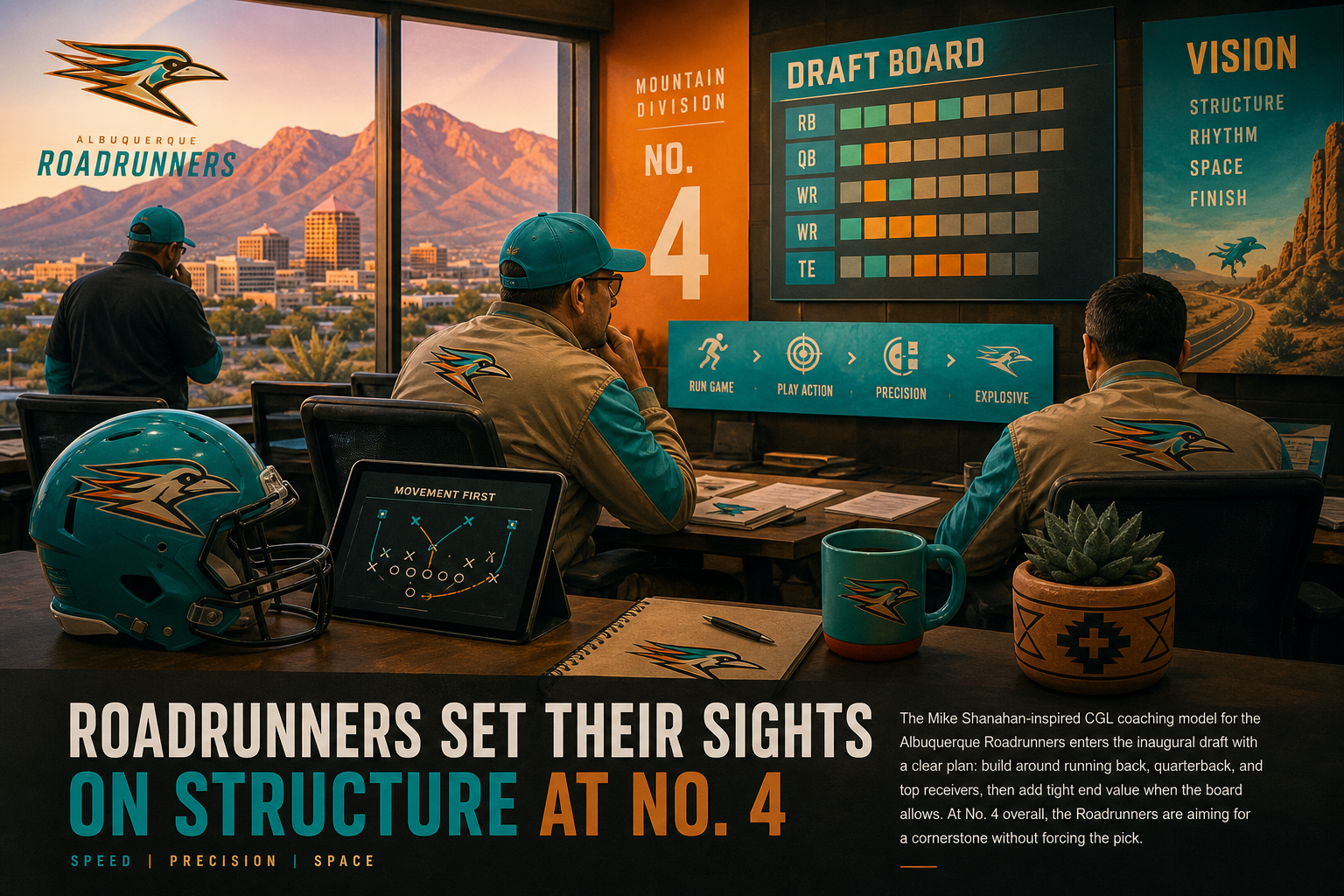
The Mike Shanahan-inspired CGL coaching model for the Albuquerque Roadrunners is walking into the inaugural draft with a simple edge: clarity. At No. 4 overall, the Roadrunners are high enough to land a cornerstone and far enough back to have to stay sharp. That is not a bad place to be. It is a place that punishes wishful thinking.
And that is exactly why the Albuquerque Roadrunners coaching model sounds so deliberate. The plan is not about collecting names. It is about building around running back, quarterback, and top receivers, with tight end in the mix if the value fits. In this setup, the first job is to find players who can run the ball, protect the quarterback, and produce every week inside a defined role.
That kind of roster-building has a hard edge to it. The coach did not hide from that. “It’s a strong slot. You’re close enough to the top to get a real cornerstone, and far enough back that you have to stay disciplined. That usually keeps you honest.”
That line tells you plenty. The Roadrunners are not treating the fourth pick like a luxury. They are treating it like a test. If the board gives them a clean foundation piece, they will be ready. If it does not, they are not going to force the issue just to satisfy a positional wish list.
The broader draft philosophy matches that tone. The model said it wants steady weekly production, especially at positions that are hard to replace. It also said it will lean toward players with the clearest and most sustainable role. That is not flashy. It is not loud. But in a 36-round startup draft, it is the kind of thinking that can separate a contender from a team that spends all spring chasing highlights.
The positional priorities are straightforward. Running back is at the front of the line. Quarterback matters. Top receivers matter. Tight end sits right behind them if the value is right. The coach put it plainly: “I want players who can function in a structure, not just chase a highlight.”
That is the heart of the identity here. Movement, timing, clear assignments. Players who fit the structure and produce within it. That is how the Roadrunners want to play fast and stay on schedule. It is also how they want to survive the pressure that comes with drafting near the top without the freedom to get careless.
The obvious counterargument is that No. 4 can tempt a team into overthinking. Maybe the best player on the board is a quarterback. Maybe it is a tight end. Maybe the cleanest value lands somewhere other than the first position the team would prefer. But the coaching model already addressed that, too. If the top quarterback or tight end is the clearest value, it will not force a different pick out of habit. “What matters is weekly production, role security, and whether that player holds up over time.”
That is the kind of answer that keeps a draft board from turning into a panic board. It is also why this team sounds selective rather than passive. Selective means you wait for the right opening. Passive means you hope the board fixes your problems. The Roadrunners do not sound interested in hope.
The preseason lens offered a few more hints, though not enough to rewrite the board. In the Hall of Fame Game, Haynes King showed functional playmaking with both passing and running, Carson Beck was efficient, and Kedon Slovis showed clean command in limited work. Jalen Brooks drew attention with a downfield result. But one game is one game. As the coach said, “Nothing there changes a major view on its own; it’s more confirmation of traits than a full verdict.”
That keeps the draft conversation grounded. The Roadrunners are not building around a preseason box score. They are building around roles, structure, and repeatable production. When the model talks about a player like Bijan Robinson, Puka Nacua, or Trey McBride, the tie-breaker is not just talent. It is role clarity. Who has the clearest weekly job? Who gives the roster the strongest foundation? Who fits the structure best?
That is the kind of question that can shape an entire startup draft.
The verdict is pretty clear: the Albuquerque Roadrunners are not trying to win the room with noise. They are trying to win it with discipline. If the first few picks fit together, the whole roster can move faster. If they do not, No. 4 can become a trap in a hurry. Right now, this looks like a team determined not to fall into that trap.