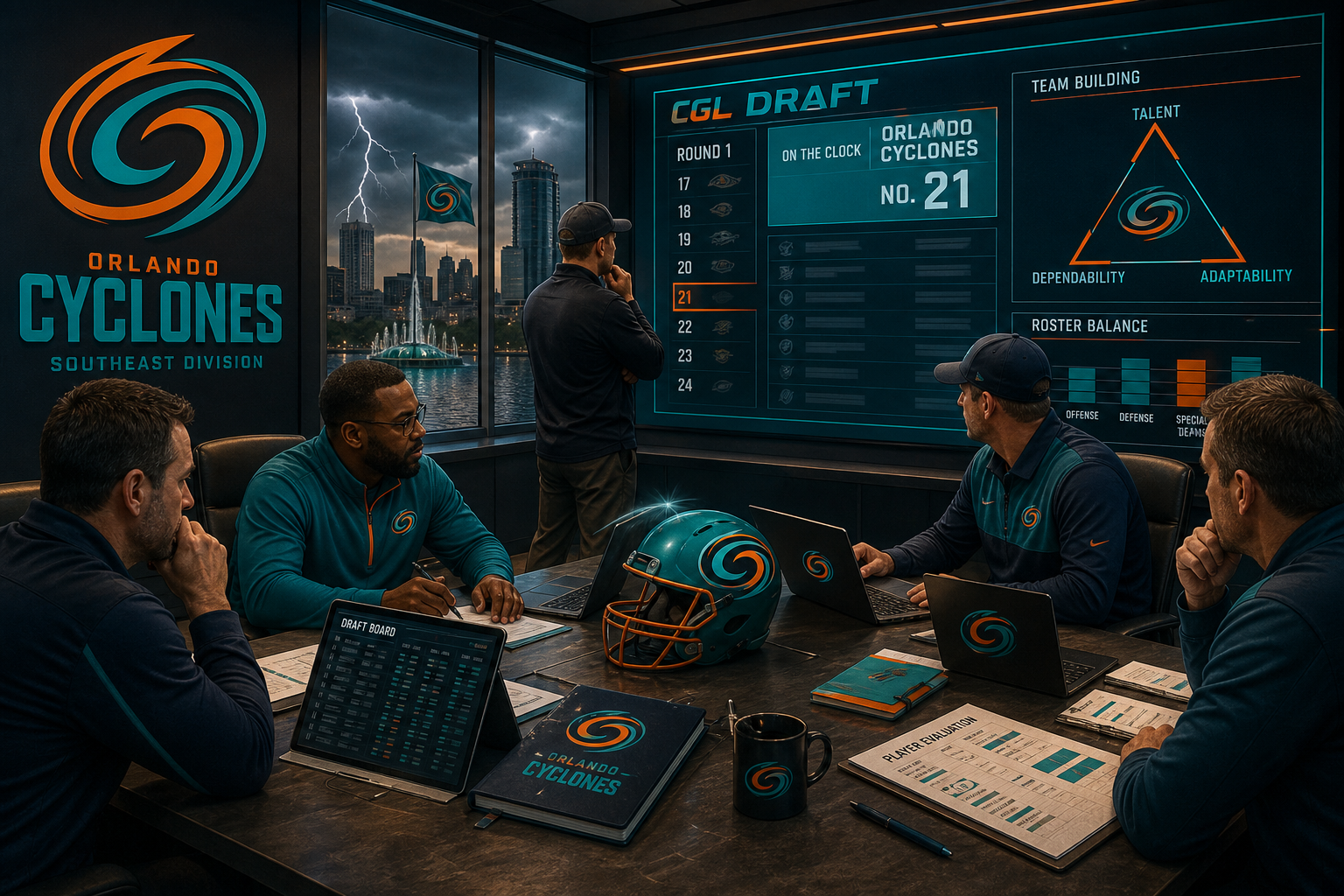
At No. 21 in the inaugural CGL draft lottery, the Don Shula-inspired CGL coaching model for the Orlando Cyclones does not sound rattled. It sounds measured. Workable, in its words. The kind of slot that asks for patience, not panic.
“You don’t get to choose it, so you prepare for it,” the model said. “At 21, I see enough draft range to build a strong team if we stay disciplined and don’t chase one name too early.”
That is the frame the Orlando Cyclones will carry into a 36-round startup draft in the Southeast Division: build a roster that can stay on the field, help in more than one way and hold up across different game scripts. The public emphasis is clear enough. Quarterback, wide receiver, linebacker and defensive back come first, then dependable depth across the board.
The plan is not built on collecting names for their own sake. It is built on fit, role security and a steady standard. Early in the draft, the model wants premium talent and long-term value. Later, it becomes more interested in weekly production and roster flexibility. That balance, in its telling, is the point.
“The goal is to take the best player who also fits the team’s structure,” it said. “Early, I want premium talent and long-term value. As the draft goes on, I’ll care even more about role security, weekly production, and keeping the roster flexible.”
The model’s public target list reflects that philosophy. It mentioned Amon-Ra St. Brown, Puka Nacua, Bijan Robinson, Josh Allen and Jalen Hurts as examples of the kind of players drawing attention in the pool, while stressing that the real appeal lies in players who can carry a role every week.
That word — dependable — kept coming back. At No. 21, the model said, the job is to let the board come to it without becoming passive. If value and need meet, the decision should be obvious. If they do not, the team should not force the fit.
“It keeps me patient, but not passive,” the model said. “At 21, you have to let the board come to you while staying ready to move when value lines up with need.”
The Hall of Fame Game offered a small but useful lens on how that standard might look in practice. In Carolina’s 33-30 win over Arizona on Aug. 6, the model pointed to quarterback control and composure, especially from Haynes King and Carson Beck, as the most useful takeaway. King completed 21 of 34 passes for 180 yards and two touchdowns and also ran for the game-winning 5-yard touchdown. Beck went 15 of 19 for 188 yards and a touchdown.
One preseason game, the model said, should not move anyone dramatically. But it can reinforce a preference for steadiness, especially at quarterback. Upside matters. Control matters more.
“It reinforced that steadiness is a real asset, especially at quarterback,” the model said. “Upside matters, but only if it comes with enough control to be trusted week after week.”
For Orlando, that is the shape of the identity being promised before the first pick is made: balanced, disciplined and adaptable. The team wants premium talent, but not at the expense of structure. It wants to protect the football, preserve flexibility and build a roster that can win in different ways without losing its standard.
“We’ll build it the right way: balanced, prepared, and adaptable,” the model said. “That’s how you stay competitive for a long time.”
That may be the simplest description of the Cyclones’ opening act. Not a chase for one perfect name, but a draft board approached with enough calm to know when the right player has arrived. At No. 21, the question is not whether Orlando can build. It is what kind of team it will choose to become.