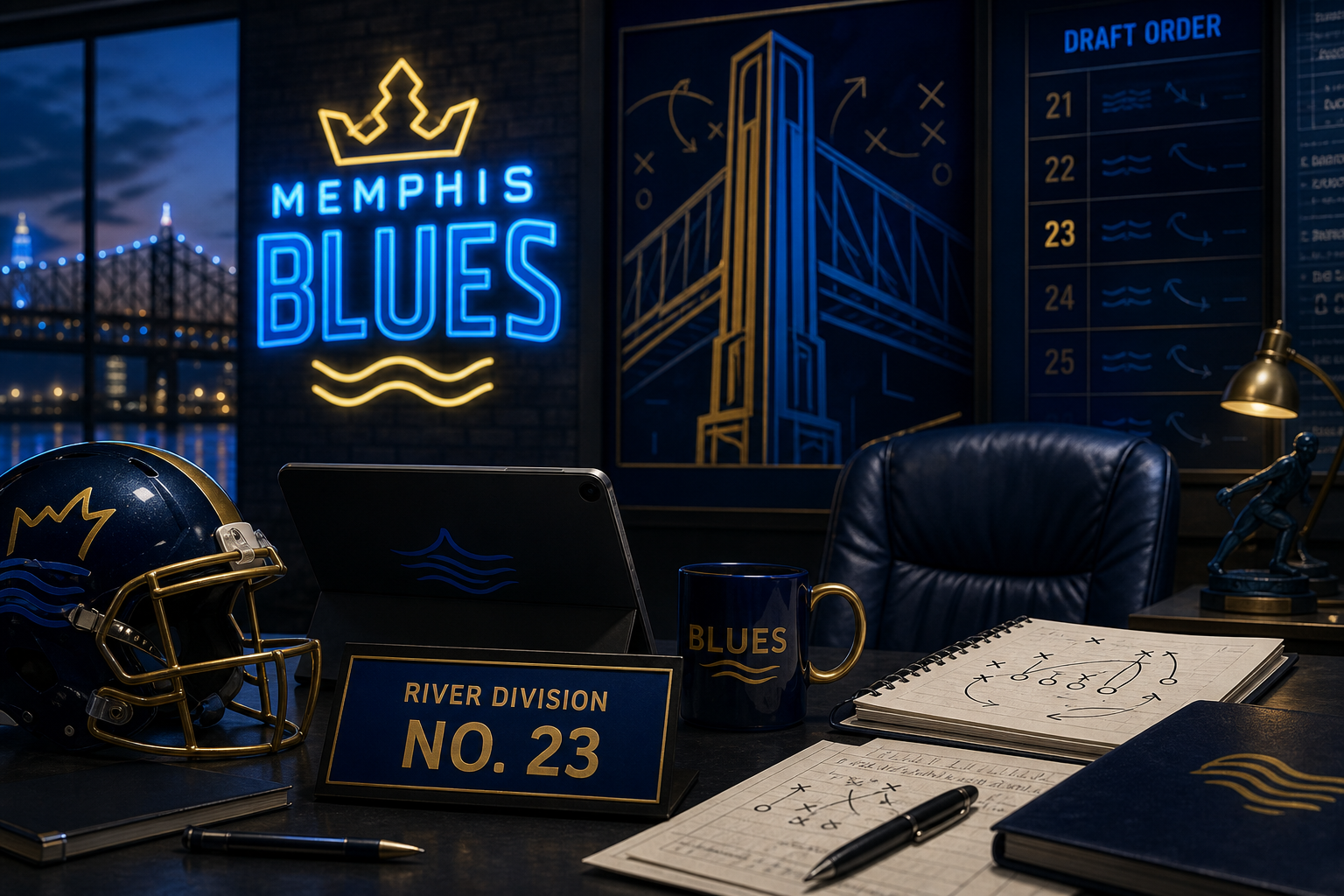
The Sean Payton-inspired CGL coaching model for the Memphis Blues is treating the No. 23 pick in the inaugural draft as a chance to shape the room, not wait for it to decide the team’s identity. The public message is clear: Memphis wants a roster built to force coverage changes, create mismatches and keep defenses uncomfortable every week.
That starts with premium offensive players. In the coach’s own words, the model is prioritizing “quarterback, receiver, tight end, and backs who can stay on the field in all situations.” The aim is not balance for its own sake, but leverage: players who can “make a defense declare what it is and then punish it.”
That philosophy fits the draft position. At 23, the Memphis Blues are not in the range where the first pick on the board is guaranteed to fall to them, so the decision-making shifts from waiting to choosing. The coach said, “It changes the path, not the mindset. I’m still aggressive.” That is the useful distinction. The slot demands discipline, but not passivity.
The strongest public signal is how the team is defining value. Positional value still matters, but only if it does not block an offense-altering player. The coach framed it bluntly: “We’ll respect positional value, but not at the expense of leaving explosive offense on the board.” In practice, that means a tight end who changes coverage rules can outrank a more conventional value pick, especially if the player brings weekly volume, role security or a mismatch the offense can build around.
That is why the public discussion around premium tight ends and high-volume receivers matters. The coach described tight end as a cleaner mismatch and receivers as players who bring “more routes, more weekly touches.” The names mentioned publicly — including Trey McBride, Brock Bowers, Puka Nacua and Amon-Ra St. Brown — were not commitments, but they did reveal the board Memphis is studying. Those are players who can stress a defense without needing perfect conditions.
The same logic extends to how the team views roster construction in a 36-round startup. This is not a file built around one star and filler. The coach wants “players who can be moved around and used creatively,” plus defined roles and multi-use ability. In football terms, that means more than just talent. It means players who can line up in multiple spots, stay useful in the passing game and keep defenses from labeling them too quickly.
There is also a tactical reason the public comments leaned toward quarterback movement and decision-making. Asked about the Hall of Fame Game, the coach highlighted Haynes King’s ability to create when the picture changed, and called Carson Beck “efficient” and Kedon Slovis “clean.” That matters as evaluation context, not as a conclusion. One preseason game, as the guardrail here makes clear, is one data point. It can nudge a file; it does not close the case.
Still, the evaluation lens helps explain the broader roster plan. Memphis is not chasing a polite build. The stated identity is speed, leverage and flexibility, with enough offensive juice to make the opponent answer the Blues rather than the other way around. That is a clear strategic bet in a startup draft: take the players who can distort defensive rules, then fill in the rest around that pressure.
The question now is whether the board at 23 cooperates. If a premium tight end is there, the public comments suggest Memphis would not hesitate. If a receiver with heavy weekly volume is available, the team sounds just as ready. The key variable is not whether the Blues like offense — they clearly do — but whether the draft room offers the kind of weapon that justifies leaning into it early.
What to monitor next is simple: whether Memphis uses the early rounds to lock in coverage-changing offensive pieces, or whether the board forces the Blues to pivot without losing the aggressive identity the coach has already made public.